


Detergent for Sweat Stains & Yellow Collars | Clean Guy


Protein vs protease
Sweat stains.
Solved science.
Yellow pits and collar rings are protein and oil problems, and protein and oil are exactly what enzymes eat. The fix is chemistry, not scrubbing.
Shop the lineup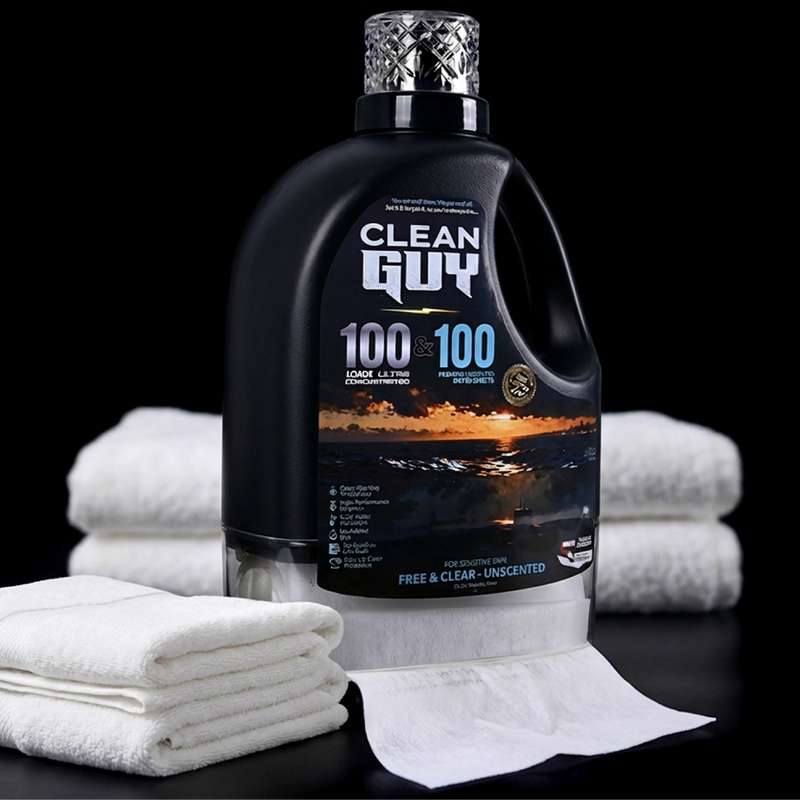
The short answer
The best detergent for sweat stains uses protease and lipase enzymes to break down the protein and oil that cause yellow pits and collar rings. Pre-treat the area with direct detergent contact, wash cold, and never dry a shirt until the stain is gone, since heat sets protein permanently.
Updated June 2026
What a sweat stain actually is
The yellow on a collar or underarm is not sweat alone. It is the protein and oil in sweat bonding with fabric over repeated wears and warm dryer cycles. Once it sets, surface detergents cannot reach it. Enzyme detergents can: protease targets the protein, lipase targets the oil, and together they break the stain down at the source instead of bleaching over it.
The pre-treat play
Apply detergent directly to collars and underarms and let it sit briefly before the wash. Use cold water, which the formula is optimized for, since heat can set protein stains deeper. And do not run a stained shirt through the dryer until the stain is gone, because heat locks in whatever the wash missed. Two cycles beats one hot one.
The antiperspirant complication
The yellow on a white shirt is rarely sweat alone. Aluminum-based antiperspirants react with sweat proteins to form the compound that bonds into cotton, which is why the stain concentrates exactly where product meets fabric. That chemistry explains the two rules that matter most: pre-treat the underarm zone specifically, because that is where the reaction lives, and wash cold, because heat accelerates the bonding you are trying to reverse. Guys who switch to letting shirts dry before dressing also slow the buildup considerably, since damp product transfers most aggressively.
Mistakes that make stains permanent
Every set-in yellow stain has the same biography: someone washed it hot, did not check it, and dried it anyway. Heat is the villain twice, setting the protein in the wash and locking the survivors in the dryer. The other compounding errors are skipping the pre-treat, which leaves the concentrated antiperspirant zone underdosed, and waiting weeks between wears and washes, which gives the buildup time to oxidize. The protocol is mechanical: pre-treat the pits and collar, wash cold, inspect in good light, rewash if any shadow remains, and only then dry. Shirts treated this way from new stay white for years, and even neglected ones recover more than most guys expect.
The collar-and-pit protocol
- Apply detergent directlyWork a small amount into collars and underarms, let it sit several minutes.
- Wash cold, full doseEnzymes do the dismantling. Heat would set what they have not reached.
- Inspect before dryingIf any shadow remains, rewash. The dryer makes survivors permanent.
At a glance
| Stain chemistry | Sweat protein plus oil, often with antiperspirant |
|---|---|
| Active enzymes | Protease for protein, lipase for oils |
| Pre-treat time | Several minutes of direct detergent contact |
| Water temp | Cold. Heat sets protein-based stains |
| Golden rule | Never dry until the stain is fully gone |
Shop the lineup
Get it done
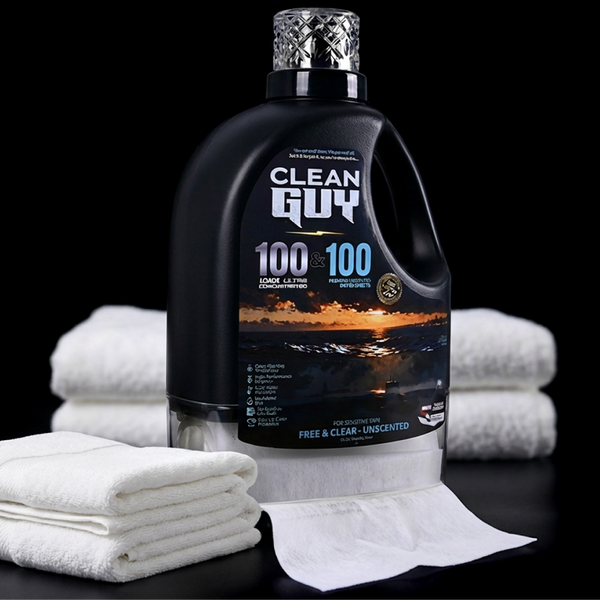
Free & Clear Detergent
Sensitive skin
No fragrance, no added dye, full 6-enzyme power. The clean with nothing extra.
Shop now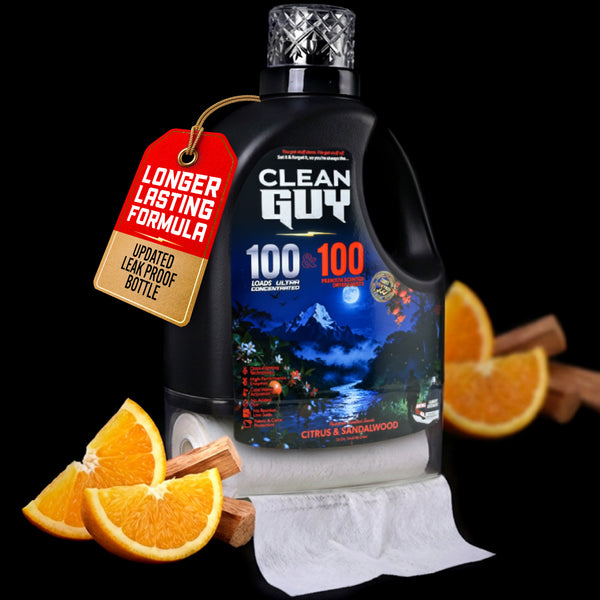
Citrus & Sandalwood Detergent
The daytime pick
Fresh-cut citrus zest on a smooth sandalwood base. 100 loads, sheets included.
Shop now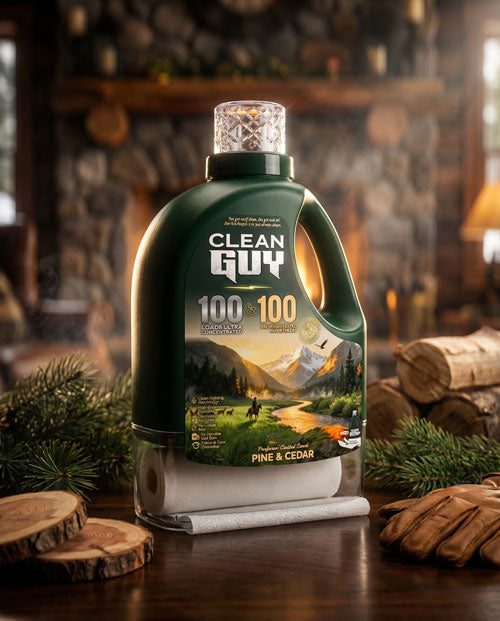
Laundry Detergent + Dryer Sheets
The flagship 2-in-1
100 ultra-concentrated loads plus 100 dryer sheets in one bottle. Four scent profiles.
Shop nowQuestions, answered
Good to know
What removes yellow sweat stains from shirts?
Enzyme detergents. Protease breaks down the protein and lipase breaks down the oils that cause yellowing. Pre-treat the area directly and wash cold.
Why do my white shirts turn yellow at the collar?
Repeated contact with skin oils and sweat proteins, set deeper by warm dryer cycles. Pre-treating collars before each wash prevents the buildup.
Should I wash sweat stains in hot or cold water?
Cold. Heat can set protein-based stains. The Clean Guy formula is built to clean fully at cold temperatures.
Can I dry a shirt if the stain is still visible?
No. Dryer heat locks remaining stain into the fiber. Re-wash until the stain is gone, then dry.
Can old, set-in yellow stains be removed?
Often improved significantly, sometimes fully. Repeat the pre-treat and cold-wash cycle two or three times. Years-old stains that survived hot dryers are the hardest cases.
Do sweat stains mean my deodorant is the problem?
Aluminum antiperspirants accelerate yellowing on whites. Letting product dry before dressing and pre-treating regularly manages it without switching products.
Do sweat stains happen on colored shirts too?
Yes, they just hide better. The same protein and oil buildup stiffens the fabric and holds odor even where no yellow shows. The pre-treat and cold-wash protocol applies to the whole rotation, not just the whites.
Break up with Big Laundry
100 loads. 100 built-in dryer sheets. One bottle that does both jobs. Free shipping on orders over $49.
Shop the lineup